Peaceful Trials

You Will Never Face Trials Alone

Getting Closer to Jesus: I hate to be blindsided, and I am sure you do, too. Nobody likes to be caught off guard by bad news or troubling circumstances. The shock and surprise of such experiences make these difficulties doubly devastating.

That’s why Jesus gives us a divine heads-up in John 16. Standing at both ends of this chapter, like bookends, Jesus gave his followers an FYI on some of the challenges they would certainly face. In verse 1, he says, “I have told you these things so that you won’t abandon your faith.” Then again at the end of the chapter in verse 33, he reminds them of this insider information so that when bad things happen, they won’t be unsettled.

Just what insider information did Jesus provide? Simply that your faith is going to get you into a fair amount of trouble in this life. People are not going to like you because you follow Jesus. You will be persecuted not only for the stand you personally take on moral issues, but just for the position your Christianity represents. In fact, some people will even hate you with a murderous zeal disguised as religious passion simply because of the Christian life you live:

Indeed the time is coming when those who kill you will think they are doing God a service. (John 16:2, LB)

Without even trying, your lifestyle of faith will bring others under such conviction that they will find it intolerable and want to do away with you. Things may get a bit rough, so be ready for it, Jesus says.

The good news, however, is that you will never have to face these difficulties alone. The fact is, through Christ:

  • You will overcome each challenge victoriously, even the most extreme challenge of staring into the abyss of martyrdom.
  • You will overcome because you know what is coming. (John 16:1,4, 33)
  • You will be victorious because Jesus has already been victorious under these same pressures. (John 16:33)
  • You will be able to face these situations with courage and grace because of the presence of the Divine Helper, the Holy Spirit. (John 16:7)
  • You will win in the hour of trial because the Sovereign Father who loves you (John 16:27) will hear and answer your every prayer. (John 16:23-24)

Knowing ahead of time what is coming, and knowing that your victory has been secured already, you can go about your day, and come what may—trouble, hardship, disappointment, failure, persecution, hatred, even death—you can live in the wonderful reality of what Christ promised: “In Me, you will have peace!”

Peaceful trials—that’s what Christ has promised you.

Take the Next Step: You and I do not know what tomorrow holds, but we know Who holds tomorrow. And we know Who holds our lives in his hands. So why don’t you join me in thanking God ahead of time for His peace that will guard our hearts and ease our minds tomorrow, no matter what circumstances tomorrow may bring.

Looking Forward!

Heaven is Not a Cheap Substitute for Earth

Getting Closer to Jesus: People who have followed Jesus throughout the ages did something that Christians from the Western world in our day don’t do as much: They thought a lot about heaven.

They were right to do so. Perhaps they had a more balanced theology than we do, possibly their spiritual leaders taught more often on the future world than ours do, or it could be that since life was so hard and following Christ came at such a high price, looking forward to eternity was simply the natural thing to do. Maybe it was all of the above.


Whatever the case, heaven was on their minds. It is not so much for us. Earth has become so good to us that we almost see the approach of eternity as a rude interruption to our pursuit of the good life in this present world. Some believers almost think and act as if heaven is a cheap substitute for Planet Earth. It is not. It is our true home, our Divine destiny purchased by the blood of Jesus when he died on the cross, the place where our full potential will be perpetually, increasingly, uninterruptedly released as we rule and reign with Christ. As the old timers used to sing,

This world is not my home I’m just a-passin’ through. My treasures are laid up somewhere beyond the blue. The angels beckon me from heaven’s open door. And I can’t feel at home in this world anymore.

We would do well to practice dwelling on our eternal dwelling more. Doing so is not wishful thinking, or pain avoidance, or a form of escapism. It is what Jesus instructed his disciples, and by extension, what you and I are called to do. The fact was, Jesus was going to leave—and at first, it would be a painful leaving. He would die on the cross, according to God’s eternal plan. Then he would ascend back to his Father. In his absence, he would send the Comforter, the Holy Spirit, who would be with the disciples, and in them continually. The Spirit would constantly abide with them, empower them for Christian living and witness, lead them into truth, and reveal the deeper things of God to them. Even still, life would be tough for them because they followed Jesus—they would be persecuted, rejected, and killed for their faith. But one of the things Jesus said they needed to do to endure the hardships of this life and thrive in the midst of pain was to dwell on the good things to come.

What are those good things to come? For starters, there will be fullness of joy. The grief of the present will turn to joy (John 16:22), and the joy will be so great in heaven that the grief of the past will pale by comparison until it fades into oblivion. Pain, disappointment, and heartache will be forgotten, and joy will be their new reality—for all eternity.

Furthermore, there will be fullness of life. (John 16:23a) Christ’s disciples will not even need to ask him for anything; they will already have everything.

And finally, there will be fullness of relationship. (John 16:23b) The disciples will be able to go directly to God for anything they want because of what Jesus has accomplished. We will no longer wrestle with the image of God being a distant, immovable, uncaring deity in a galaxy far, far away; he will be up close and quite personal.

Jesus seems to be saying that we should continually keep those future realities in our present thoughts as we face the harsh conditions of our current lives. And, by what he then says in verse 24, in practicing this type of “heaven-thinking” now, we will be so filled with confident assurance that asking for what we want and need right in this present world will be our faith response to whatever comes our way:

Until now you have not asked for anything in my name. Ask and you will receive, and your joy will be complete. (John 16:24)

Looking forward to your eternal future on a regular basis is one of the best things you could do for your faith. In one of his letters, C.S. Lewis wrote, “Good and evil when they attain their full stature are retrospective. That is why, at the end of all things, the damned will say we were always in Hell, and the blessed we have never lived anywhere but in heaven.”

Why not go ahead and imagine your future home right now? When you finally get there, you will realize that Jesus made sure it was always pretty close.

Take the Next Step : Carve out some time and schedule a place where you can be alone with God this week—perhaps even today. Take your Bible and open it to the very last book and chapter of the Bible, Revelation 22. Slowly and gratefully read it, and let that picture of your future reality invade your present world.

The Chief Conviction Officer

Pump the Brake, Pray More, Let God Do His Job

Getting Closer to Jesus: Have you figured this out yet? You do a horrible job at being the Holy Spirit in other people’s lives.

Yet how tempting it is to do his work for him. It is easy to do when you are passionate about the truth. It is easy to do when you see how someone you care about is living counter-productively to a bless-able life. And frankly, it is easy to do when people aren’t fulfilling your vision for their lives. Yes, God loves them, and you have a wonderful plan for their lives—and it is your job to make sure they live up to your high calling. Right?

Wrong!

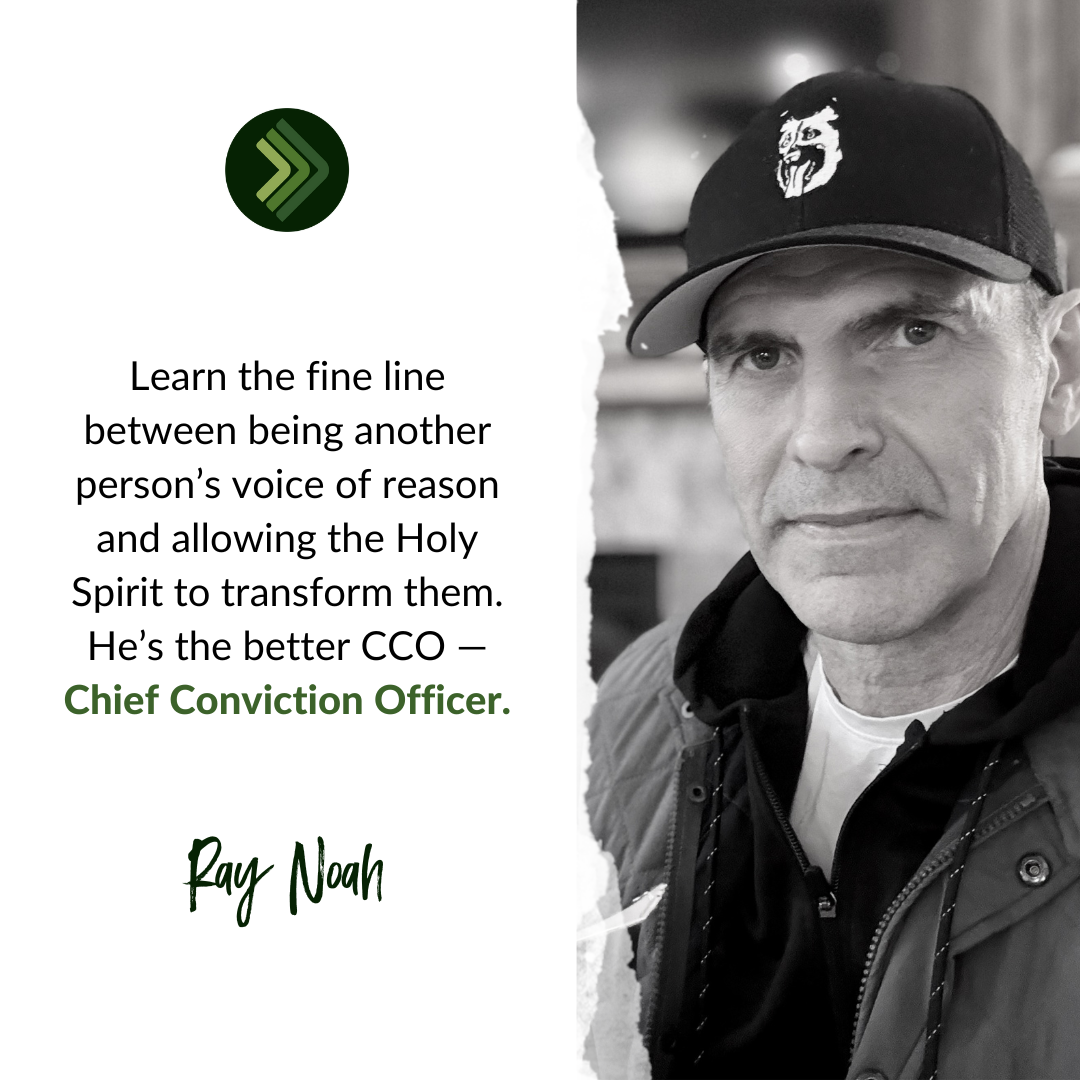
Spiritual maturity demands that we take care in observing the fine line between serving as the voice of reason for people and allowing the Spirit to transform their thinking. We step into the Spirit’s territory the minute we assume the role of CCO—Chief Conviction Officer. To be effectively used by the Holy Spirit in the lives of others, we must figure out the difference between sharing the truth in love, respectful persuasion and passionate debate—all of which are good and necessary to being the influencer Jesus calls us to be—and with being argumentative, rude, nagging, arrogant and flat out irritating. We have been called to lead the horse to water, so to speak, but only the Holy Spirit can create the unquenchable thirst that makes them want to drink deeply from Truth.

It takes real discernment and sensitivity to figure out what to say, how much to say, and when to say it—and when just to shut up and let God go to work. Oswald Chambers said, “One of the hardest lessons to learn comes from our stubborn refusal to refrain from interfering in other people’s lives. It takes a long time to realize the danger of being an amateur providence, that is, interfering with God’s plan for others.”


The truth is that God, indeed, has a wonderful plan for people’s lives, but we need to allow him to convince them of how that plan needs to play out. By all means, we ought to take the role of encourager, exhorter, and at times, admonisher, but only the Holy Spirit can bring the change of heart, the right thinking, and the proper steps that will lead them to the incredible life God has envisioned.

Chances are, in this season of time, you are being tempted to tell certain people how to think, how to feel, and how to do life well. Perhaps it is your child, maybe it is your spouse, it could be a friend, or it might be a co-worker—it is just part of the human equation. So, let me suggest that in that particular situation, you simply take your foot off the gas pedal, pray a lot more, and let the Holy Spirit work. My guess is the transformation in that person’s life will happen a lot more quickly, deeply, and enduringly if you take that approach.

Try to remember at all times: You are not the Holy Spirit!

Take the Next Step : Ask God to reveal where you have been doing the Holy Spirit’s work for him. When he shows you, first, repent, then second, ask for greater discernment and sensitivity to fulfill the role of influencer God has called you

Relational Terrorism

Cruelty is Never Biblically Justified

Getting Closer to Jesus: These days, not only the threat, but the daily reality of terrorism has occupied the twenty-four-hour news cycle, dominated water-cooler conversations at work, and planted fear in the hearts of ordinary citizens. And now, regular debate in our political discourse focuses on what terrorism is (I’ve even heard some say dismissively, “Hey one country’s terrorist is another’s freedom fighter”), what to call or not call it (so as not to inflame the terrorists), why terrorism is on the rise (perhaps our Western values and lifestyles are to blame for the rise of terrorism around the world), and how to combat it (do we send in the special forces to wipe them off the face of the earth or send the terrorists to the corner for a time out?).

Often, the what, why, and how in our conversations about terrorism turn absurd on both ends of the discourse: “Let’s nuke them back into the stone age,” or “let’s be nice to them and maybe they will leave us alone.”

But what is not debatable or absurd is what God says about terrorism—as well as those who carry it out and those who perpetuate it through educational, philosophical, financial and spiritual support: Anyone who diminishes, hurts or kills another in the name of their god does not know the one true God or his Son, Jesus Christ, whom he sent.

There will even come a time when anyone who kills you will think he’s doing God a favor. They will do these things because they never really understood the Father. (John 16:2-3, The Message)

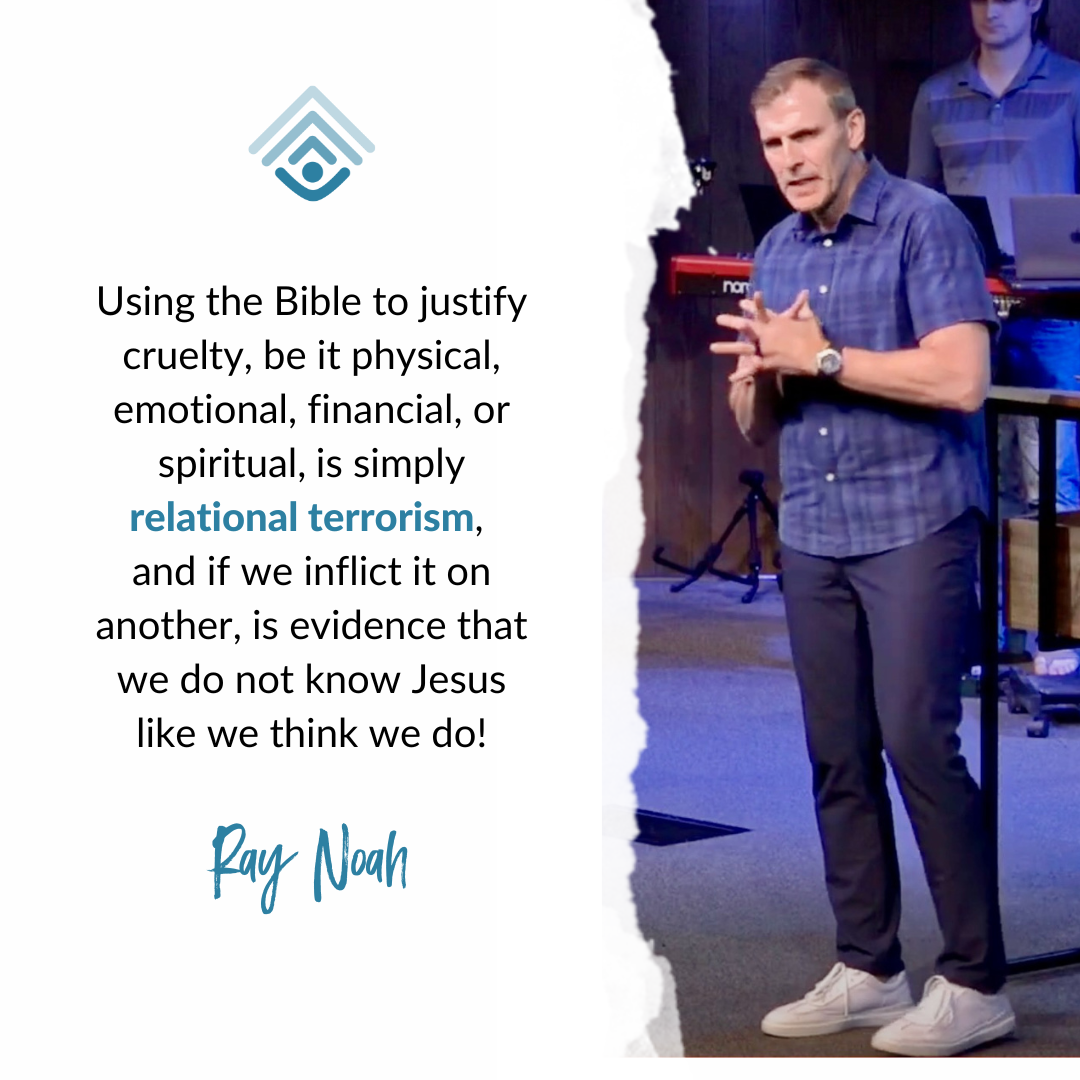
Thomas Carlyle said, “One of its worst kinds of waste … is that of irritating and exasperating men against each other, by violence done, which is always sure to be injustice done; for violence does even justice unjustly.” Make no mistake, violence of any kind done in the name of faith—in the home, at the church, in the community, between political belief systems and countries—is terroristic, morally bankrupt, and evidence in and of itself that those who inflict it (or stand by in tacit approval of it) are as far from God as can be.

And God will judge it! Jesus said, “those who live by the sword will die by the sword.” (Matthew 26:52) Death will come—spiritually, relationally, perhaps even physically—likely in this life from the irreversible law of sowing and reaping, or in the next life as people, people groups, nations, and world systems stand before the Great White Throne judgment of Almighty God. (Revelation 20:11-15)

Jesus spoke of the threat of religious violence to give his disciples a heads-up that this kind of religious zeal that embraced terrorism was certainly coming. And his forewarning was to serve the purpose of settling them in their faith when that awful reality was finally upon them. We, too, would do well to simply acknowledge the reality that religious terrorism will increase as the final days of Planet Earth draw to a close. Jesus still doesn’t want his followers to be unsettled in their faith—either to begin doubting God or getting carried away in unproductive debates about terrorism—by the rise of evil and violence done in the name of religion. Mark it down—and get prepared.

Yet I can’t help but think there is a more practical application we should latch onto from Jesus’ insights into religious violence. In a sense, is spiritual terrorism occurring in our homes when violence or the threat of violence or some other form of intimidation is used to control others—and justified by the Bible? Do we commit relational terrorism when we can fling incendiary, hateful, and hurtful words via social media—all justified by our spiritual point of view, of course—in ways for which we are not held to account? When we speak critical and judgmental words anonymously, isn’t that akin to throwing an emotional grenade into someone’s life without having to stick around to view the damage that it does—that we have done?

I have a feeling that violence—not just physically, but more likely, through emotional attacks, financial coercion, and spiritual abuse—justified Biblically, happens more often, is inflicted more subtly, and is carried out more creatively than we are either conscious of or care to admit. But from here on out, with the help of the Holy Spirit, the Chief Conviction Officer in our lives, let’s soberly remember that if we resort to relational terrorism, that in itself is evidence that we do not know Jesus like we think we do!

Take the Next Step : Ask God to reveal to you where you might be inflicting pain on another in ways that you have justified by your faith. You might want to ask those close to you as well. And where there is evidence that you are guilty, repent of it, repudiate it, and change!

The World Hates You—God Loves You

Love of the World is Hatred of God

Getting Closer to Jesus: It is a real dilemma for Christians: God loves the world so much that he gave his Son to die for it, but the world hates God (they didn’t like his Son too much either) because it belongs to the Evil One. But wait, there’s more: The story that God has commissioned His followers to bring to the world is received mostly as bad news because this Good News first must address the problem of human sin—which can make sinners a bit uncomfortable.

Hold on, I’m not through yet: You and I belong to God, and since Satan, the current strongman who dominates this world and its inhabitants, hates God and everything of God, we are included in that hatred. Jesus couldn’t have put it in any clearer terms:

Since I picked you to live on God’s terms and no longer on the world’s terms, the world is going to hate you. (John 15:19, Message)

Now that’s a hard pill to swallow, especially in our culture where Christians have been brought up for the last couple of generations on a steady diet of positive mental attitude pablum, seeker-sensitive evangelism, and a church growth movement that tries everything in its power to make the unbeliever want to come to church. For the last thirty-plus years, too many churches in the Western world have placed more emphasis on making sinners comfortable than making committed disciples, which requires preaching Christ and him crucified. And a critical part of the crucifixion story is that we, too, must experience the crucifixion of self to enter the blessings of Christ’s crucifixion on our behalf. More energy and resources have been devoted to creative messaging and capturing the “cool factor” than cross-bearing, dying-to-self discipleship.

Don’t believe me? Just walk into any number of church lobbies, and you will feel like you are in a Starbucks rather than a sanctuary’s vestibule. When the service starts, listen to the music and you will think you are listening to America’s Top 40 in a sea of fans enjoying a rock concert rather than among engaged worshipers offering up the sacrifice of praise to please their God. Sit through a sermon and you will think you have just listened to a cross between a late-night talk show host and a self-help guru. They will help you smile your way to your best life in seven easy steps. Check out the altar call at the end of the message, if there even is one, and you will think people have just signed up for a thirty-day free trial of Netflix rather than surrendering the rest of their lives to Jesus Christ.

What you are unlikely to find, though, is any talk of sin—it just makes people feel too uncomfortable. You may not hear words like “repentance” or “surrender” or “obedience” or “Lordship”—it may just scare the pre-Christian away. What you are going to hear, however, is what I would call a Burger King Christianity—the kind that says, “special orders don’t upset us…have it your way.”

Now listen, I am not just a grouchy, out-of-touch, aging preacher—okay, I am at least not one of those. I don’t think pastors ought to go out of their way to be offensive. I do believe that churches ought to think creatively about reaching the disinterested and hostile in their community. I love excellence and think the church service ought to be our best offering to the King of kings. And believers ought to do what they can to build bridges to the lost people in their lives.

But our job is neither to impress the world by trying to be a cool version of it or to tell it that everything is mostly okay with it—except for a few minor adjustments. Our job is to talk about the Good News that Jesus died for our sin—sin that separates us and makes us hostile to a holy God. Once we deal with the sin issue through proclaiming the truth in grace and love, inviting sinners back to God through the repentance of sin and calling them into a surrendered lifestyle of committed, cross-bearing discipleship, both we and the sinners we help to rescue will realize that what we have found is something more satisfying, more valuable, more positive by far than anything this world can provide—the pearl of great price!

Quit worrying about whether the world will like you or not. It won’t—that is guaranteed. If you belong to Jesus, you will be hated, but that is okay, because you will be loved by God. And that is all that matters.

Take the Next Step : How much have you bought into the mentality that your job is to get the world to like you? Ask God to help you jettison that unhealthy need from your life. And take a moment to meditate on 1 John 2:15 (NLT): “Do not love this world nor the things it offers you, for when you love the world, you do not have the love of the Father in you.”

The Secret To Uncontainable Joy

True Love Loves the Unlovable

Getting Closer to Jesus: Several times throughout the Gospel of John, Jesus has tied true discipleship and authentic love for him with our obedience to his commandments. That is a message our current brand of Christianity needs to hear—and frankly, it’s tough medicine. The truth is, you cannot claim love of Christ while doing whatever feels good to you. Real faith requires the surrender of your will to God’s. It is this simple: If you love Jesus, you will obey his commands.

By our definition of love, that doesn’t seem too loving. Love and obedience or love and commands usually aren’t terms we link together. But what we must realize about Jesus is that his commands are not oppressive. In fact, the Apostle John reminds us in I John 5:3, “Loving God means keeping his commandments, and his commandments are not burdensome.”

On the contrary, Jesus’ commands are the gateway to our joy. And not just joy, but Jesus described the gladness that would well up within us as overflowing. Jesus’ equation for authentic faith was that obedience to him would equal organic, unstoppable, spilling-over joy in us.

But there was a particular kind of obedience that Jesus said would lead to this special kind of joy: Loving one another. And not just a brotherly love, but it was to be the same kind of love that Jesus demonstrated for his disciples. What kind of love was that?

It was proactive. Jesus actually searched out his disciples to be the object of his love. He didn’t wait to see if they were lovable or even if they would love him in response. His love went out of its way to find them, and then he poured out his love upon them—even on one of them he knew would end up betraying him.

It was unconditional. His disciples did nothing to deserve his love, and they certainly could do nothing to earn his love. In fact, they often did just the opposite. They fought with each other. They selfishly jockeyed for position with him. At times, they didn’t listen to him and often they didn’t understand what he taught them. They left him in his hour of trial. They even betrayed him. Yet he stubbornly loved them.

It was sacrificial. Jesus laid down his life for them. Yes, he ultimately died for their sins, but he also died to his own rights in order to serve them. He told them that even as the Lord of all creation, he didn’t come to be served, but to serve and give his life to redeem them. Nowhere do we see a more powerful and clear demonstration of sacrificial love than in Jesus giving up in order to give to his disciples.

It was inexhaustible. Nothing in their past, nothing they did while with him, and nothing they could ever do in their future (because, as the Omniscient Sovereign Lord of life, Jesus knew what was in their future) could or would diminish his love for the disciples. Since God is love, and since Jesus was God, we find in him that true love cannot be extinguished.

Jesus said that if we decided to act toward one another with that kind of love—and make no mistake, Jesus made it clear by his life that divine love was a choice, an act of the will—it would unleash from deep within us an inextinguishable flood of uncontainable joy. While our flesh, along with the Evil One, supported by the philosophies of this world, continually lies to us that joy comes from what is done for us, Jesus says it comes by what we do: proactively, unconditionally, sacrificially, and inexhaustibly loving others!

Who can you love like that today—and every day from here on out? Who can you seek out to love as Jesus has loved you? What would be a way to love them unconditionally, in a way they did not deserve and could never repay? How might you offer love that is costly to you, and not necessarily in terms of the money you spend? And as you love them, can you—or will you—do it with a commitment to sustain that love indefinitely?

Fair warning: Choose to love like that, and you are choosing to unleash the unstoppable joy of Jesus in your life. Good luck.

Take the Next Step : Who are you being led to love as Jesus has loved you? Specifically identify that person. Then, just love them as Jesus would!

What Jethro Can Teach You

Don't Let Good Destroy What Is Best

There is hardly a better investment in this life than recruiting, mentoring, and releasing leaders into the service of that over which God has given you authority. God’s blessing on a thing is never an excuse to settle for that—it is never the end. The blessing is only the beginning for more blessing, which always requires a realignment of the way we administrate God’s favor. God blessed Israel—that was good—but a release of even more blessing required Moses to release leadership to others to help administer it—that was better. Is there someone in your sphere of influence you can train for leadership? Do it—it’s a worthy investment of time, energy and resources.

The Journey// Focus: Exodus 18:13-17

Getting Closer to Jesus:The story in Exodus 18 provides us with some helpful insights into why we should raise up leaders and how to do so, whether in our home, business, church, or any other arena of life where God has given us influence.

First, the why: In the work of God’s Kingdom, good is often the enemy of the best. You will notice in Exodus 18:9 that “Jethro was delighted to hear of all the good things God had done for Israel.” Israel had witnessed the mighty hand of God — divine protection, outstanding miracles, and supernatural progress. But they had settled for something less than God’s best. As the story continues, Jethro watched Moses wearing himself out administering the blessings, so he said Exodus 18:17, “What you are doing is not good.”

God’s blessing on a thing is never an excuse to settle for that—it is never the end. The blessing is only the beginning for more blessing, which always requires a realignment of the way we administrate God’s favor. God blessed Israel—that was good—but a release of even more blessing required Moses to release leadership to others to help administer it—that was better.

So Jethro showed Moses how he was to recruit leaders to take on ministry—which would release Moses to even greater productiveness. Here are six laws of leadership recruitment that worked for Moses and will work for you:

The first law of leadership recruitment is SELECTING. Exodus 18:21 calls Moses to “select capable people—they fear God, are trustworthy and hate dishonest gain.” Your assignment as a leader is to continually watch for people with leadership potential. How do you identify those capabilities? Jethro says they are to, 1) have a deep reverence—they have the fear of the Lord, 2) have proven themselves dependable in smaller matters—they are trustworthy, and 3) have pure motives—they hate dishonesty.

The second law of leadership recruitment is EQUIPPING. In Exodus 18:20, we see that there must be an ongoing, systematic program to train all people in the principles of Godly leadership. Not everyone will become a leader, but everyone can benefit from the principles of leadership. That’s because they all will have roles of influence somewhere: home, business, and community. Training all the people in your sphere of influence will expand the leadership pool from which you recruit.

The third law of leadership recruitment is MENTORING. In the last part of Exodus 18:20, Jethro said, “Show them the way to live and the duties they are to perform.” Basically, your responsibility is to reproduce yourself in the lives of others. If you’re not doing that, you are not a leader—or a very effective one. However, good leaders demonstrate by their lives and actions a positive pattern for others to follow. That implies you have an intentional plan for mentoring, rather than just hoping others will pay attention to what you’re doing.

The fourth law of leadership is EMPOWERING. In the last part of Exodus 18:21, Jethro instructs Moses to appoint them as “officials.” In other words, don’t just give them a title and a responsibility, give them authority to lead.

The fifth law of leadership recruitment is ACCOUNTABILITY. In Exodus 18:22, Jethro says that with responsibility and authority, there must also be accountability: “Have them bring the difficult cases to you.” There is to be a system where the new leader circles back to the chief leader, whose discernment will always be needed. So they will have to be accountable to you, and you will have to continually monitor their ministry progress and effectiveness.

The sixth law of leadership recruitment is SANITY. In Exodus 18:23, Jethro says to Moses, “If you do this, you will be able to stand the strain of leadership and all the people will be satisfied.” Leadership should never drive you crazy, stress you beyond your ability to cope, or destroy your personal life. Leadership is meant to be a joy. And your leadership is meant to produce deep satisfaction in the lives of those you lead. The presence of unrelenting stress in the leader’s life and dissatisfaction among the people is a clear indication that these godly principles of leadership development have been ignored.

Then Jethro gave the best reason of all to put these principles to use when he said to Moses and, by extension, to you and me, in Exodus 18:23, “And so God commands.”

There is hardly a better investment than in recruiting, mentoring, and releasing leaders into the service of that over which God has given you authority.

[/callout]

Take the Next Step: Is there someone in your sphere of influence you can train for leadership? Do it—it’s a worthy investment of time, energy, and resources.