Holy Shivers Over The Holy Land

When God Speaks—Be Quick to Obey!

SUMMARY: Only a real estate agent or a cartographer would appreciate the Bible passages that give exacting detail of the settlement of land for the tribes of Israel. But what we might find boring, those who were on the receiving end cared very much about the details, because every square inch represented centuries-long waiting for the promises of God now miraculously fulfilled. So, whenever you come to a passage on land allotment, write yourself into the story. Even though you don’t have a literal Promised Land for which you are waiting, you are waiting for God to fulfill his promises to you—and believe me, you care about the details of what that will look like. Read it and rejoice in the details as an act of faith, because one day, sooner or later, God will answer your prayers and fulfill his promises to you with specificity and generosity.

God Speaks—I Obey // Focus: Joshua 17:1-10

Manasseh’s boundary ran along the northern side of the ravine and ended at the Mediterranean Sea. North of Manasseh was the territory of Asher, and to the east was the territory of Issachar. The following towns within the territory of Issachar and Asher, however, were given to Manasseh: Beth-shan, Ibleam, Dor (that is, Naphoth-dor), Endor, Taanach, and Megiddo, each with their surrounding settlements.

Ever get the holy shivers? Yeah, me neither. But I’ve seen people respond to God’s blessing in ways—physically and emotionally—that far exceeded their capacity to manage it. Especially in foreign, rural contexts, I have watched worshipers get so beside themselves with joy in the Lord that their expressions of love, praise, and gratitude broke human containment. They got down and boogied in response to the blessings of God.

Now when you read Joshua 17, holy shivers are the last response you are likely to have. Frankly, only a real estate agent would be inspired by the details as land is parceled out to the tribes of Joseph. A cartographer might enjoy the chapter a little bit as well because of the prospects of mapping out the Holy Land. But other than those two, I doubt if too many readers are going to be excited with the details of the land distribution that make up chapter 17.

So, what is in this for us? Let me answer that by having you put yourself in the sandals of the people in this chapter. Imagine yourself as one of the members of a clan in the tribe of Ephraim. Pretend that you are one of the five daughters of Zelophehad (one of the young ladies was named Noah, by the way; she must have been an amazing woman!), who stood to gain real estate as an inheritance because their dad had no sons as heirs. Imagine that you, your parents, grandparents, and ancestors going back 400 years had been hearing about a Promised Land that would one day be yours, and all you have known for centuries was slavery and decades of wilderness wandering. You had nothing to your name, no place to call home, no sense of permanence and no real geographical identity. And now, you have been given land—and the land had been described for you with geographical specificity. Do you think you might be a bit excited about the description of your real estate in that context? I think so!

“When you come to scriptures on land allotment, rejoice in the details as an act of faith, because soon, God will answer your prayers and fulfill his promises with specificity and generosity.” ~Dr. Ray M. Noah

What is described in this chapter (and several surrounding it) represented the promises of God finally fulfilled after what seemed like interminable waiting. This represented answers to prayer. This was a bit of heaven on earth. And the Israelites were rightly excited about real estate details that today we find boring and worthy of skipping past. But don’t—refuse to get either bored or skip-happy. Write yourself into this and other stories like it.

Even though you don’t have a literal Promised Land for which you are waiting, you are waiting for God to fulfill his promises to you—and believe me, you care about the details of what that will look like! So, whenever you come to section of scripture like this, rejoice in the details as an act of faith, because one day, sooner or later, God will answer your prayers and fulfill his promises with specificity and generosity.

Choose You This Day: Turn to the back of your Bible today and look at the map of the Holy Land that offers a schematic of the allotment of land for Israel’s twelve tribes. Now take a moment to rejoice in advance of the Promised Land into which God is bringing you.
.

Allowing Canaan To Camp Out In Our Hearts

When God Speaks—Be Quick to Obey!

SUMMARY: The Puritan preacher John Owen said, “be always at it while you live; cease not a day from this work; be killing sin or it will be killing you.” Whether it is flat-out disobedience or benign neglect, our disobedience always allows sin to grow. And where sin grows, sin festers, and spiritual anemia, spiritual sickness and spiritual death will ultimately result. This is a matter of kill or be killed! Go with kill!

God Speaks—I Obey // Focus: Joshua 16:5-6,10

The boundary of their homeland began at Ataroth-addar in the east. From there it ran to Upper Beth-horon, then on to the Mediterranean Sea…. But the tribe of Ephraim did not drive the Canaanites out of Gezer, however, so the people of Gezer live as slaves among the people of Ephraim to this day.

The modern reader of Scripture cannot help but read the Old Testament through the eyes of twenty-first-century Western culture. For that reason, much of what we read seems harsh and unfair, if not brutal and primitive, and definitely at odds with our current values of acceptance and inclusiveness. Even in warfare, how we treat our enemy is much different from how it was in Old Testament days—and for that, I am sure our enemies are grateful (although I don’t think they would take the same approach with us).

Case in point: God told the Israelites to annihilate the Canaanites and purge them from the land as they went in to possess it. As the people of God moved in, by Divine command, the current residents had to go—every last one of them.

Now, while most Bible-believing Christians today accept that, we are certainly uncomfortable with both God’s command to displace the nations and his method for displacing them. When non-believing people question the harshness of the God of the Old Testament in light of such stories, we have no adequate answer, though there are reasonable explanations. We simply surrender territory on this issue of the sovereign God’s loving but just nature. My point here is not to defend God. For one thing, he can defend himself. And for another, if we truly understood the wickedness and brutality of the people who occupied Canaan in the days of the conquest—people who would make the worst terrorist group imaginable look like a Girl Scout pack—we would feel a little better about God’s commands.

Let’s set that aside for now. The point I want to make here is that when we fail to do what God commands, for whatever reason, we will suffer the logical consequences of that failure. Whether it is flat-out disobedience or benign neglect, our disobedience always allows sin to grow. And where sin grows, sin festers, and spiritual anemia, spiritual sickness, and spiritual death will result, sooner or later. God told the Israelites to drive out the Canaanites; they didn’t. They had their reasons: the Canaanites were harder to get rid of than we might imagine; most of them had been decimated anyway, so what would it hurt leaving the few that were left actually made good slaves for menial labor that no one else really wanted to do? So leaving them actually made better sense than driving them out. The Israelites had their reasons, and I suspect many of the reasons sounded good.

“When we justify anger, lust, pride, judgmental attitudes, and other sins that are easy to camouflage, we commit the sin of the Israelites. We have allowed Canaan to camp out in our hearts.” ~Dr. Ray Noah

But sin always has consequences, and the outcome of sin is never good! What was true for Israel is true for you and me today. We are not called to drive out a people from our neighborhood; that kind of literal biblical conquest is over. Yet there is another conquest God has assigned his people: to get rid of sin from their lives. The Apostle Peter spoke of being done with sin:

Therefore, since Christ suffered in his body, arm yourselves also with the same attitude, because whoever suffers in the body is done with sin. (1 Peter 4:1)

Theologically, we know that; we understand that sin must go. But like the Ephraimites, that is not always as easy as it sounds. For that, God gives the Holy Spirit to help us do away with sin in our lives, and he gives the grace of forgiveness when we fail. Moreover, he walks with us as we exert continuous effort to mortify our sinful nature. That is not the real problem here: it is when we make acceptable what God calls sin; it is when we allow the sin that will ultimately enslave us to hang around in our lives —that is the problem

When we justify anger, lust, pride, judgmental attitudes, and other sins that are easy to camouflage, we commit the sin of the Israelites: We have allowed Canaan to camp out in our hearts.

“When we justify anger, lust, pride, judgmental attitudes, and other sins that are easy to camouflage, we commit the sin of the Israelites. We have allowed Canaan to camp out in our hearts.” ~Dr. Ray Noah

The Bible should serve as a cautionary tale in this regard, for there is story after story of how allowing Canaan to camp out paved the way for Canaan to rise up and bite Israel on the backside. The end result of inattention to sin is always far greater than the pain of sin when it is in full bloom in our lives—and it will always grow into bloom if we neglect our call to decimate it.

Got sin? Deal with it! Even the little, leftover stuff. Be killing sin or it will be killing you

The good news is, God stands ready to assist those who get with it in getting rid of sin.

Choose You This Day: Is there leftover sin in your life—the little stuff that is easy to camouflage and justify? Quit! Stop! Deal with it! Today is a great day to start, and God will supply both the want to and the will to give it the boot from your life.

Asking For The Whole Enchilada

When God Speaks—Be Quick to Obey!

SUMMARY: A.B. Simpson said, “Our God has boundless resources. His only limit is us. Our thinking and praying are too small.” So, in your praying, don’t just ask for the bare minimum, go for the whole enchilada, because if you don’t ask, he won’t give. And if you don’t ask bigly, don’t be surprised that you don’t receive bigly. Your Father wants you to see unlimited possibilities in him. He longs for you to ask, and ask daringly. And when you do, you honor him.

God Speaks—I Obey // Focus: Joshua 15:18-19

As Caleb’s daughter, Acsah, got down off her donkey, Caleb asked her, “What’s the matter?” She said, “Give me another gift. You have already given me land in the Negev; now please give me springs of water, too.” So Caleb gave her the upper and lower springs.

In your praying, don’t just ask for the bare minimum; go for the whole enchilada. That is why I think this otherwise unimportant story was included in scripture. If anything, Acsah’s request of her father teaches us not to sell God short. God is a big God, and his resources are unlimited. As A.B. Simpson, the founder of the Christian and Missionary Alliance denomination, said, “Our God has boundless resources. His only limit is us. Our thinking and praying are too small.”

Acsah was the daughter of Caleb. Caleb was one of two spies out of twelve who came back from scouting the Promised Land with a positive report. That story is told in Numbers 13, forty-five years prior to this moment in time. Caleb was of a different kind of spirit than the average guy. He was a possibility thinker. He didn’t see obstacles; he saw opportunities. He never saw giants in the way; he saw God as the way maker. His faith in God informed his asking and his acting.

When the ten other Israelite spies saw their enemies as giants and themselves as grasshoppers by comparison, Caleb (along with Joshua, the twelfth guy in this consortium of spies) saw only the God of Israel who was bigger than Israel’s biggest enemy—even bigger than that gigantic men of Anak (Numbers 13:28). In fact, four decades later in Joshua 14, Caleb, now an eighty-five-year-old, boldly asks Joshua to give him the mountains around Hebron for his inheritance. And in declaring that he could take the mountains, he specifically called out the giants of Anak, who were still in the land occupying the very mountain that now belonged to Caleb. I think Caleb was still spoiling for a fight with these Gigantor-types all these years later.

“As Christ-followers, we’re in the mountain-moving business, and our currency is faith. If what we’re doing doesn’t require a desperate need for God—then we’re not doing the Lord’s business.” ~Dr. Ray Noah

His daughter was cut from the same cloth as Caleb. Like her father, she was bold, she was brassy, and she didn’t see problems; she saw possibilities. When her father gave the inheritance—a rarity that a woman would be specifically named in the allotting of land in that time and culture—she decided that what he gave her was not enough. Not that she was ungrateful, she just knew the can-do spirit that her father possessed—and she leaned into it. She knew that he was motivated by faith; that his eye saw beyond what normal people saw, so she appealed to his character in asking for not only a piece of land, but for the nearby springs as well. After all, what good is land in the wilderness if it has no access to water? Acsah wasn’t just asking to gratify her selfish desires; she was asking for something essential for her family to succeed and expand.

And her father granted her request. (Joshua 15:19) My guess is that as she walked away from this encounter, old Caleb turned to his buddies and said, “That’s my girl!”

And your Father will grant your requests, too. But if you don’t ask, he won’t. And if you don’t ask bigly, don’t be surprised that you don’t receive bigly. Your Father is of a different Spirit—one that wants his children to see unlimited possibilities in him. He longs for his kids to ask and ask daringly. That is why he has encouraged them throughout his Word to ask for the desires of their heart. In one of the most stunning passages in scripture, the Son of God said,

“If you remain in me and my words remain in you, you may ask for anything you want, and it will be granted! When you produce much fruit, you are my true disciples. This brings great glory to my Father.” (John 15:7-8)

Now obviously, this isn’t a blank check for selfish asking. The key to what John 15:7-8 says is that we first must “abide in him and allow his words to abide in us.” The “abiding in his word” isn’t about Bible reading or scripture memorization, it is about intimately knowing the character of God—and letting that knowledge inform your asking.

This is the story of Caleb and Acsah. Both were of the tribe that asks for the whole enchilada. I hope you will join me in being a part of that tribe, too! Yeah, how about you and I form the Enchilada Tribe?

Choose You This Day: What are you asking God to do in your life? Kick it up a notch; don’t just ask for the land, ask for the springs, too. God loves it when you do that.

Faith Sees Farther

When God Speaks—Be Quick to Obey!

SUMMARY: William Newton Clark said, “Faith is the daring of the soul to go farther than it can see!” As believers in Jesus, you and I are in the mountain-moving business, and our currency is faith. If what we are doing doesn’t involve faith—if we can do it ourselves without a desperate need of God—then we are not doing the Lord’s business. But with faith we are, and with it, nothing is impossible.

God Speaks—I Obey // Focus: Joshua 14:10-13

Then Caleb said to Joshua, “Now then, just as the Lord promised, he has kept me alive for forty-five years since the time he said this to Moses, while Israel moved about in the wilderness. So here I am today, eighty-five years old! I am still as strong today as the day Moses sent me out; I’m just as vigorous to go out to battle now as I was then. Now give me this hill country that the Lord promised me that day. You yourself heard then that the Anakites were there and their cities were large and fortified, but, the Lord helping me, I will drive them out just as he said.” Then Joshua blessed Caleb son of Jephunneh and gave him Hebron as his inheritance.

Are you daring great things for God? Whether or not you are is your choice, but I say, “Why not?” You and I have only one life to live, and it will be over soon enough, so let’s try something daring for God. Why not do something that will make a difference in someone’s life one hundred years from now? How about we try something that will leave them talking about us long after we are gone? Yes, let’s attempt something that will be celebrated by saints and angels alike for all eternity! Why not at least try?

That is the story of faith in the Bible. Read Hebrews 11 and you will see that God’s Great Hall of Faith is made up of men and women, no different than you and me, who stepped out and attempted the impossible for the sake of the kingdom. Now some of them were successful and some of them were not, by the word’s standards anyway, but it was the faith that led them to try that got them eternally noticed in Hebrews 11.

“As Christ-followers, we’re in the mountain-moving business, and our currency is faith.  If what we’re doing doesn’t require a desperate need for God—then we’re not doing the Lord’s business.”~Dr. Ray Noah

Caleb was one of those kinds of people. He was in his mid-eighties when he informed Joshua that he was ready to take on a certain warrior-like and historically large—and I mean physically big and imposing (see Deuteronomy 2:10, 21; 9:2)—segment of the Canaanites in the well-fortified hill country surrounding Hebron. “Give me this mountain,” Caleb said to Joshua as the land was being allotted to the tribes, and that has forever become the war cry of unlikely men and women whose faith sees farther than the eye sees and whose spirit dares to attempt impossible things for God.

I love what William Newton Clark said, “Faith is the daring of the soul to go farther than it can see!” As believers in Jesus, you and I are in the mountain-moving business, and our currency is faith. If what we are doing doesn’t involve faith—if we can do it ourselves without a desperate need of God—then we are not doing the Lord’s business. But with faith, nothing is impossible. Jesus, the Founder and Finisher of our faith, said, “The simple truth is that if you had a mere kernel of faith, a poppy seed, say, you would tell this mountain, ‘move!’ and it will move. There is nothing you wouldn’t be able to tackle.” (Matthew 17:20)

We have been given faith—more than enough, actually—but are we daring to exercise it? We have in front of us at the present moment “things farther than we can see.” Or at least we should. If we don’t, then we need to come before God and ask him to give us a scary big vision of what could be.

Whatever that vision is, however impossible it might seem, whatever the obstacles that stand between us and it, if it is noble, if it is consistent with God’s kingdom, if we hunger after it, we must stretch ourselves to reach it, to achieve it. William Carey, missionary to India and considered to be the father of modern missions, said, “Attempt great things for God—expect great things from God.”

That is the story of common men and women who stepped out to where others wouldn’t and in so doing, ended up achieving the uncommon. They didn’t step out thinking they were doing the heroic; they just stepped out thinking God would take care of them, which he did. And by stepping out in faith, they stepped into God’s Great Hall of Faith.

“Give me this mountain,” eighty-five-year-old Caleb boldly demanded. He was the forerunner of many others who would do similar:

Jabez said, “Enlarge my territory!”

David said, “That giant is no big deal!”

Shadrach, Meshach and Abednego said, “We like it hot!”

Nehemiah said, “Let’s rebuild this wall!”

Esther said, “If I die, I die!”

What are you saying? What are you praying? What is your faith laying hold of? What is the Holy Spirit daring your soul to see that your eyes cannot? Dare great things for God—do great things for God.

Going Deeper With God: Jesus said, “I tell you the truth, anyone who believes in me will do the same works I have done, and even greater works, because I am going to be with the Father. You can ask for anything in my name, and I will do it, so that the Son can bring glory to the Father. Yes, ask me for anything in my name, and I will do it!” (John 14:12-14) Ask for some big things today!

A Spiritual Vacation or a Spiritual Victory

When God Speaks—Be Quick to Obey!

SUMMARY: God always leads us in triumph. There is always more territory he has destined us conquer. There are always more enemies he has empowered us to defeat. And while a part of you may yearn to sit back and relax, the glory of what it means to be Christian is to march forward as more than a conqueror. And why would we not embrace our calling to conquer? We have the promise of God that he himself will drive out our enemies and give the honor of sharing in his victory.

God Speaks—I Obey // Focus: Joshua 13:1,6

When Joshua was an old man, the Lord said to him, “You are growing old, and much land remains to be conquered.… “I myself will drive these people out of the land ahead of the Israelites.”

We will rest when we get to heaven. Until then, there is still work to be done. I am sorry to disappoint you if you were thinking of your Christianity as a spiritual vacation. It is not; it is a spiritual victory. Of course, there are ebbs and flows in the journey of faith along with regular rhythms of renewal that we call sabbath, but there will always be more promises to possess, territory to claim, enemies to overcome, and victories to secure.

Thus, it will always be. That is the ongoing saga of redemptive history. While God brings us through challenges and gives us victory over our enemies, the end has yet to be written. Of course, the outcome has been predetermined, but it is still in the making. That is why we say he leads us from victory to victory.

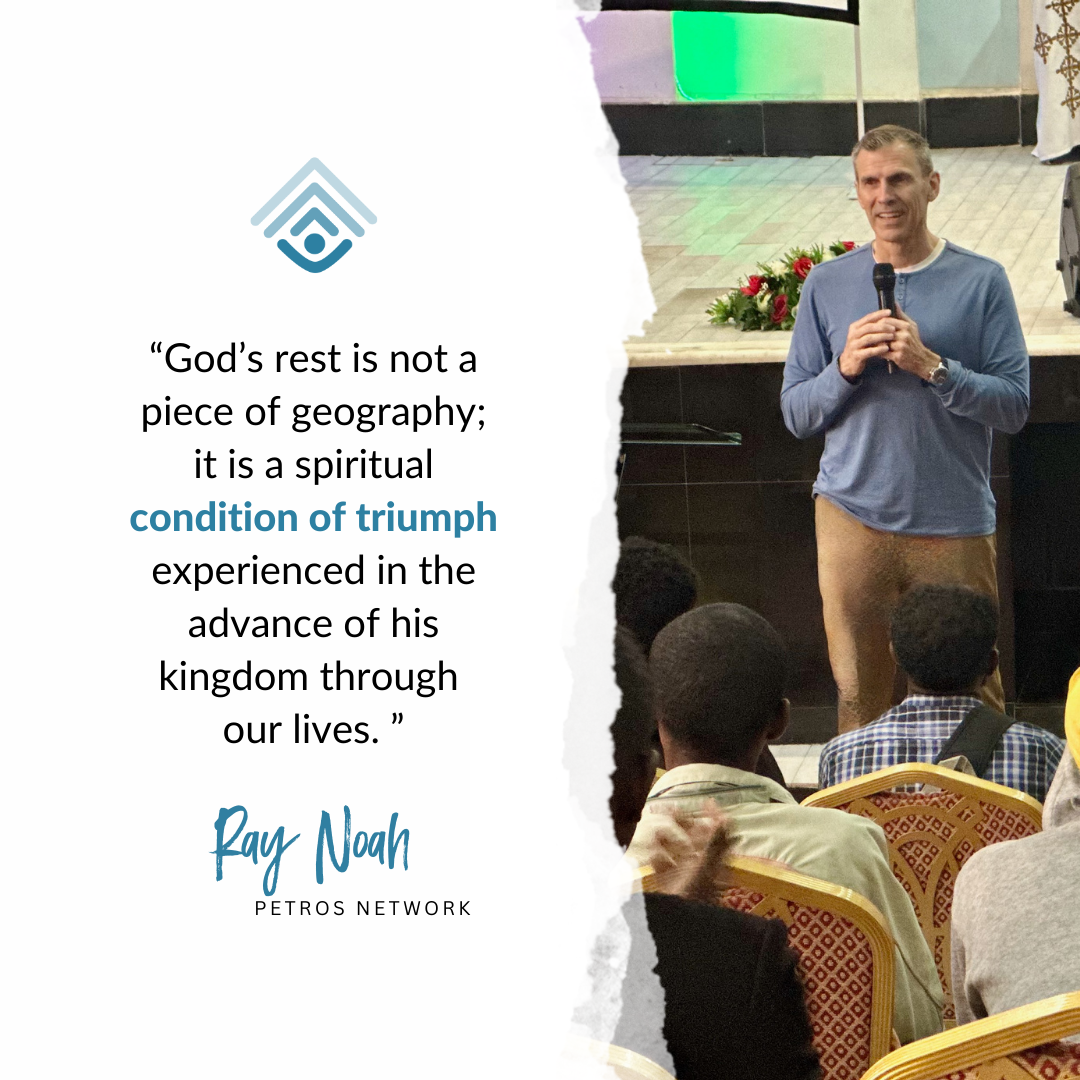
While the promises of God are as good as done, and even though the outcome has been predetermined, that never means the believer gets to sit back and rest on their laurels. God’s rest is not a piece of geography—not at this point, anyway—it is a spiritual condition of triumph. That triumph is experienced in the advance of his kingdom through our lives. Through the work that he has given us to do, we are victorious—and that is what propels us along our journey of joyful rest.

That is evident in the story of Joshua 13. General Joshua has been one of history’s most brilliant military strategists. He has won conquest after conquest against enemies that were fiercer, stronger, better equipped, and more battle-hardened than Israel’s army. But God was on Israel’s side, and city after city fell into Israel’s hands. Now, after a long period under Joshua, the time had come for others to lead in the remaining battles.

Yes, battles remained. Get used to it! In preparation for the end of his career, God told Joshua to divide the land between the twelve tribes. He was to assign specific geographical territory to each tribe, even though some of it was yet to be firmly in Israel’s possession. So why divide the land between the tribes before Israel had conquered it?

For one thing, Joshua was advancing in years, and the day of his death was looming. The task would not be complete by the time of his passing. Furthermore, there would not be a singular leader over Israel for the next four hundred years as they continued to possess and settle the land, so God assigned Joshua the task of allotting the land among Israel’s tribes, clans, and families.

Behind all of this was a great promise from God: he was on their side, and he would see to it that the land came under their possession. While they would have to do work and fight wars to possess it, God tells them, “I myself will drive these people out of the land ahead of the Israelites.” God’s promise to work on Israel’s behalf was so certain that the division of the land could be made even before it was conquered. When God makes a promise, it is as good as done. God was asking Israel through this division of land to picture what he had promised. As we have seen before in Joshua, the faith principle is that we need to picture what we want to possess.

So, what’s the point? Simply this: God always leads us in triumph. There is always more territory to conquer. There are always more enemies to defeat. And while a part of you may yearn to sit back and relax, the glory of what it means to be Christian is to march forward as more than a conqueror. And why would we not embrace our calling to conquer? We have the promise of God that he himself will drive out our enemies.

Yes, the time will come for rest soon enough. In the meantime: onward toward yet another predetermined victory.

Choose You This Day: Memorize Romans 8:37-39, “No, in all these things we are more than conquerors through him who loved us. For I am convinced that neither death nor life, neither angels nor demons, neither the present nor the future, nor any powers, neither height nor depth, nor anything else in all creation, will be able to separate us from the love of God that is in Christ Jesus our Lord.”

Naming Names

When God Speaks—Be Quick to Obey!

SUMMARY: Perhaps you think that reading through the seemingly endless lists of names in Scripture is unnecessary. Maybe you think taking the time to utter these names is boring, meaningless, and a colossal waste of your time. But let me ask you this: why do you think God, in his providential oversight of bringing the Bible into existence, saw fit to include so many statistical and genealogical lists? Do you think it was merely for historical purposes? Or were they to build the faith of his people? I would argue for both. Don’t neglect these genealogical praise songs!

God Speaks—I Obey // Focus: Joshua 12:1-2

These are the kings east of the Jordan River who had been killed by the Israelites and whose land was taken. Their territory extended from the Arnon Gorge to Mount Hermon and included all the land east of the Jordan Valley: King Sihon of the Amorites… King Og of Bashan, the last of the Rephaites….The king of Jericho…The king of Ai, near Bethel…The king of Jerusalem…The king of Hebron…

We have seen it many times already in reading through the Old Testament: endless lists of meaningless names—at least, meaningless to us. But not meaningless to the people of Israel! Every name is a story—a God-story, to be specific—of God’s provision for his people and punishment for his enemies. And every time Moses or Joshua wrote these lists down, they became a kind of checklist of praise for the people of Israel. You might say that these were praise songs for statisticians. God even loves the numbers geek!

We might be tempted to just skip over these names when we come to them in our Bible reading—at least I am. But I would encourage you not to do that. As an act of worship, read the names out loud. Of course, you won’t know how to pronounce half of them, so just make them up. Remind God of what he did for his people. Of course, God doesn’t need reminding, but in reminding him, you are really reminding yourself that the activity of God is rooted in history—it is real; that God is for his people—he is not an uncaring, distant deity; and that God fulfills his promises, which includes empowering his people to overcome their enemies.

I would then encourage you to list out your own victories. Write a “faithlist” of things that God has done for you. Go back into your past and dredge up your God-stories. Write down the things he has done for you lately. Include little provisions and big miracles. Remember what God has done and memorialize it on a list. Then thank God for each one of those answers—out loud. Do it as an act of worship. Remind God of how great he is. Of course, he already knows his own greatness, but you will be building your own faith as you do it.

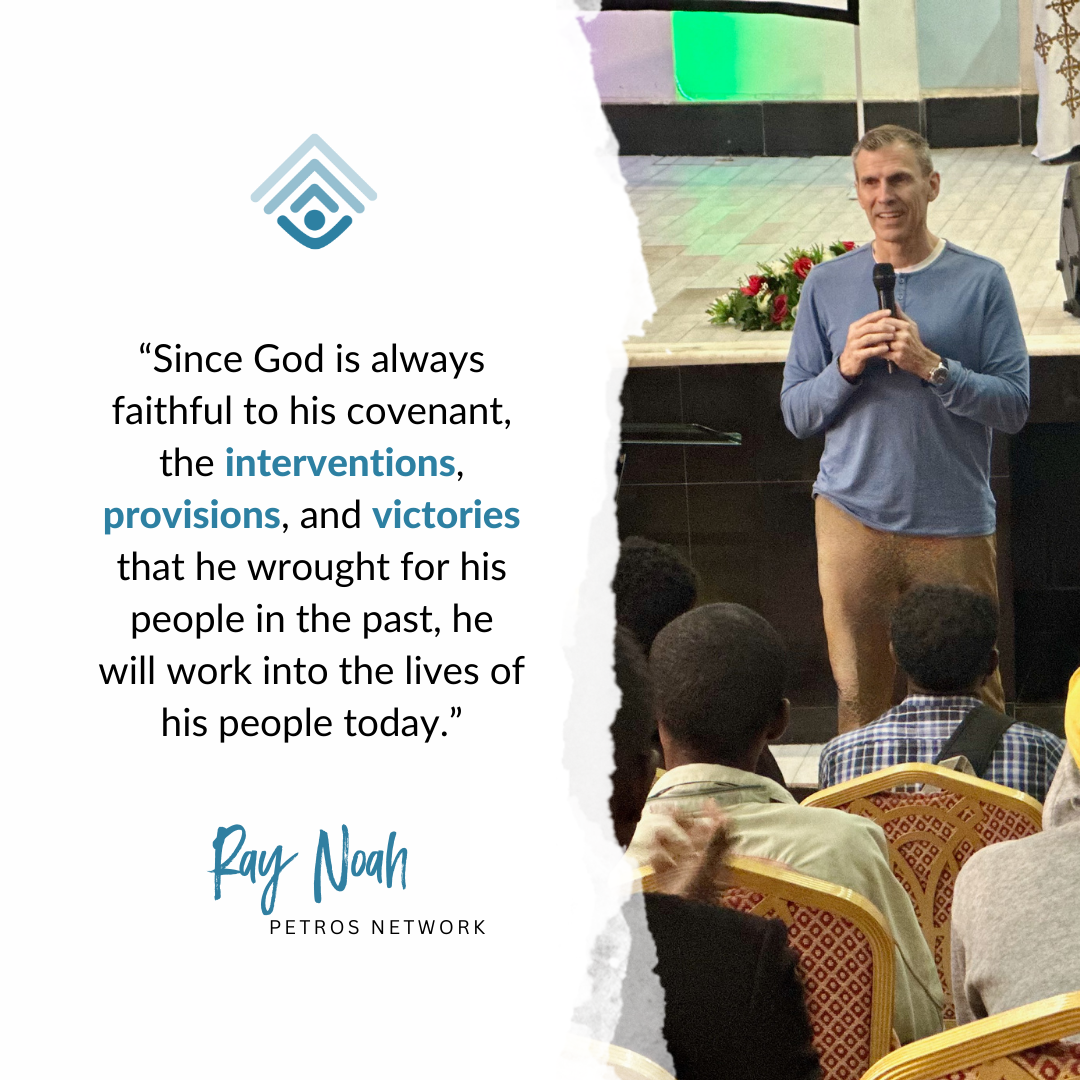
Perhaps you think that what I am suggesting is unnecessary. Maybe you think it is a colossal waste of your time. But let me ask you this: why do you think God, in his providential oversight of bringing the Bible into written form, saw fit to include so many genealogical and statistical lists? Do you think it was merely for historical purposes? Or are they to build the faith of his people? I would argue for both. They are to remind us that God’s work is not merely a spiritual fable; it is rooted in history. Moreover, what God has done in history is to teach us that he will do again. Since he is a covenantly faithful God, the interventions, provisions, and victories that he wrought for his people in the past, he will work into the lives of his people today.

These statistical and genealogical praise lists are powerful. That is why I would suggest that you come up with your own list from time to time in your journey of faith. There is an old gospel song authored in the late 1800’s by Johnson Oatman that captures what I am calling you to do. When I was growing up, my faith community often sang this song, Count Your Blessings. One of the verses and the chorus went like this:

So amid the conflict, whether great or small,
Do not be discouraged; God is over all.
Count your many blessings; angels will attend,
Help and comfort give you to your journey’s end.

Count your blessings;
Name them one by one.
Count your blessings;
See what God hath done.

Truly, God has been good!

Choose You This Day: Try counting your many blessings today? Make a faithlist of all that God has done for you. You will be amazed at God’s goodness and filled with more faith to take in the day ahead.

From Promise To Fulfillment: The Story of Faith and Obedience

When God Speaks—Be Quick to Obey!

Quotable: “Ruthless faith and risky obedience—that is the story of those who possess the promises.”

SUMMARY: God has made over thousands of promises in his Word to his people. Some of them are specific to that time and to those people, but most are general promises that are for you to possess. Picture them! That is an act of faith. Then align yourself to possess them. That is an act of obedience. Faith and obedience—may that be the testimony of your life.

God Speaks—I Obey // Focus: Joshua 11:16-18

So Joshua took this entire land: the hill country, all the Negev, the whole region of Goshen, the western foothills, the Arabah and the mountains of Israel with their foothills, from Mount Halak, which rises toward Seir, to Baal Gadin the Valley of Lebanon below Mount Hermon. He captured all their kings and put them to death. Joshua waged war against all these kings for a long time…. So Joshua took the entire land, just as the Lord had directed Moses, and he gave it as an inheritance to Israel according to their tribal divisions. Then the land had rest from war.

God had promised Israel a land—the land of Canaan. The promise was made to Abraham hundreds of years before Joshua 11 as a condition of the covenant the Lord made with this man who would become the father of many nations, including Israel (that story is contained in Genesis 12-25), and much later, the father of our faith (Romans 4:16) The rest of Genesis all the way thorough Judges tells the story of Israel’s circuitous journey to physically get to the Promised Land (Exodus-Numbers), enter it to possess it by dispossessing the nations who lived there (Joshua), and then settle it (Judges).

Joshua 11 is at the heart of the conquest story—it is where the rubber of faith meets the road of fulfillment. When the Lord had commissioned General Joshua to lead Israel to cross the Jordan and go into the land to drive out the nations, he first gave him a picture of what the Promised Land would look like:

I promise you what I promised Moses: ‘Wherever you set foot, you will be on land I have given you—the Negev wilderness in the south to the Lebanon mountains in the north, from the Euphrates River in the east to the Mediterranean Sea in the west, including all the land of the Hittites.’ No one will be able to stand against you as long as you live. For I will be with you as I was with Moses. I will not fail you or abandon you. (Joshua 1:3-5)

Joshua needed to picture what God wanted him to possess. He also needed to hear God’s twin promise of presence and power to maintain the courage it would take to go up against nation after nation that were bigger, better equipped, and more experienced in war than the Israelite army. Which brings up several important points relevant for our faith journey today about moving from God’s promise to their fulfillment I our lives:

We have to picture God’s promises if we hope to possess them—that is what “faithing” it is all about (“Faith shows the reality of what we hope for; it is the evidence of things we cannot see. Through their faith, the people in days of old earned a good reputation.” Hebrews 11:1-2)

The best of God’s promises are way bigger than what we can imagine, and even way bigger than what we need. God’s promise to Joshua was basically the entire Middle East. What that tells us is that God gives in abundance, which, simply defined, is more than we need. (“God, who is able, through his mighty power at work within us, to accomplish infinitely more than we might ask or think.” Ephesians 3:20)

The bigger the promises, the bigger the opposition to those promises we will face. The Enemy knows what is at stake in the people of God possessing the promises of God, so he throws up obstacles of every kind to discourage us from staying at the task of claiming them. Even though he is a defeated foe, he won’t go down without a fight. (“Since the first day you began to pray for understanding and to humble yourself before your God, your request has been heard in heaven. I have come in answer to your prayer. But for twenty-one days, the spirit prince of the kingdom of Persia blocked my way. Then Michael, one of the archangels, came to help me, and I left him there with the spirit prince of the kingdom of Persia.” (Daniel 10:12-13)

The promises of God are sure, but they are not automatic. We have a part to play: we have to possess them. God can’t possess them for us; we have to give spiritual effort to bring them into our possession. That, too, is called faith: bringing in through spiritual effort from the unseen realm into our reality what God has already established. (“Work hard to show the results of your salvation, obeying God with deep reverence and fear. For God is working in you, giving you the desire and the power to do what pleases him.” Philippians 2:12-13)

God promised a land, then empowered Israel to possess it, but Joshua and company had to go out and fight to claim what was theirs by divine declaration. And they did. Notice how similar the reality of their victory was to the original promise:

Joshua conquered the entire region—the hill country, the entire Negev, the whole area around the town of Goshen, the western foothills, the Jordan Valley, the mountains of Israel, and the Galilean foothills. The Israelite territory now extended all the way from Mount Halak, which leads up to Seir in the south, as far north as Baal-gad at the foot of Mount Hermon in the valley of Lebanon. (Joshua 10:16-18)

God has made promises to you, too. It may not be a literal land, but it is a territory. Faith is the activity of claiming it; of bringing it into your possession. Picture what he wants you to possess—that is faith. Believe that it is yours by divine declaration—that, too, is faith. Then get after it. Possess what you have pictured. Align your prayers and your resources—spiritual, physical, financial—to possess it. Giving spiritual effort to possess God’s promises—that is called obedience.

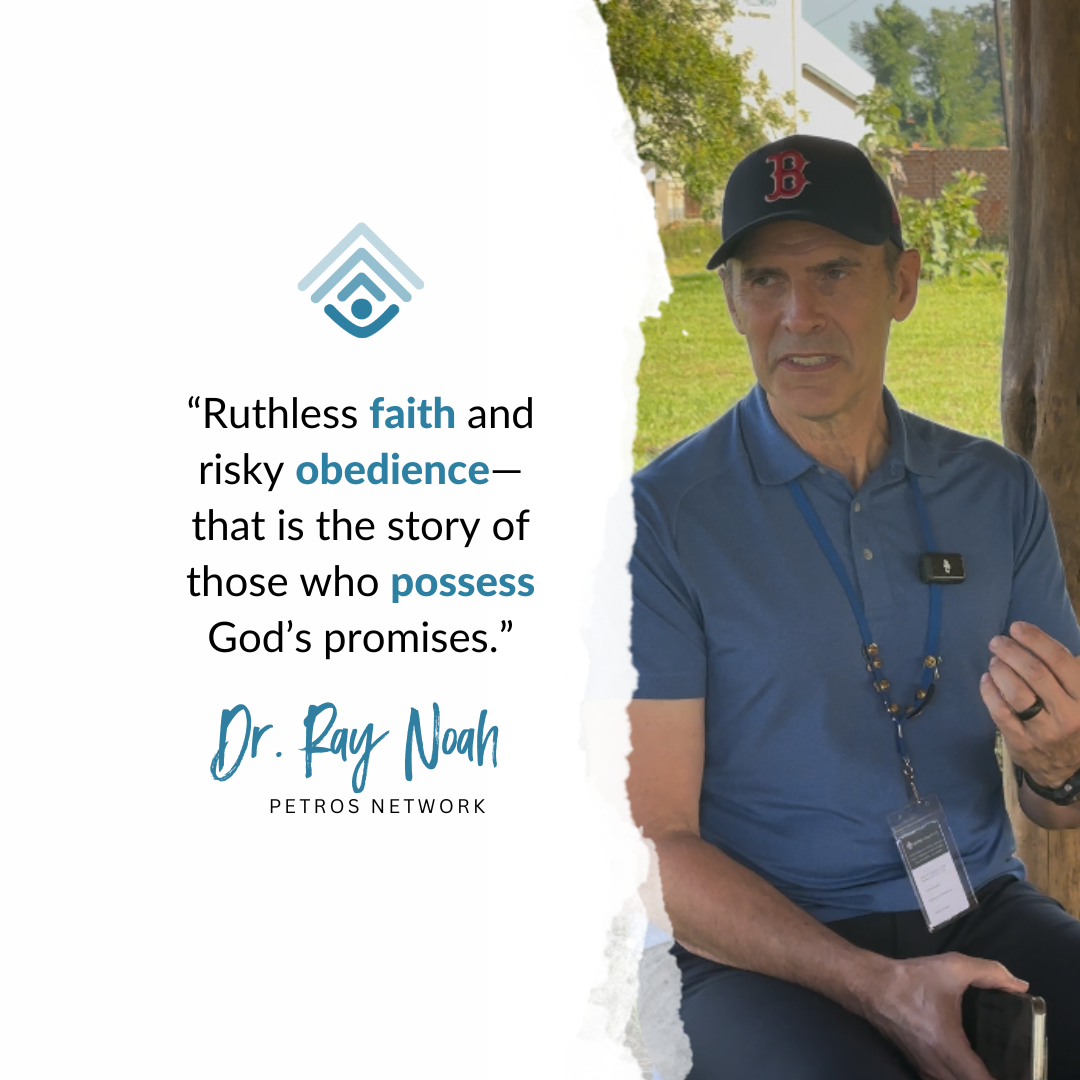
Ruthless faith and risky obedience—that is the story of those who possess the promises.

Choose You This Day: God has made over 6,000 promises in his Word to his people. Some of them are specific to that time and to those people, but most are general promises that are for you to possess. Picture them! That is an act of faith. Then align yourself to possess them. That is an act of obedience. Faith and obedience—may that be the testimony of your life.